Around the Web

The big news right now, or course, is the bombing in Boston. But I can’t add to the conversation on that except to say that I am glad the news is acknowledging that this is not just about us here in the states. It was an international marathon, one of several in the world. And while it was a sad tragedy, I hope that it is used to bring us closer together, not push us farther apart.

Now… some things from the writing side of life.

Amazon and Publishing Royalties (I love that Amazon is listening tot heir writers! Let’s hope they keep listening.)

27 Wacky Ways to Cure Writers Block (some interesting, and unusual ideas I’ve never come across before.)

Writers Club ultimate resource list…. Just.. ya, go look.

Interview with R.A. Salvatore at Comic Con

Perspectives…. Author vs Director

Simple advice from Neil Gaiman

The blurb

I like parts of the first blurb, but it was pointed out that the real meat of the blurb was the last two sentences, and fewer people would get to those sentences. Also, Ashini is the main character of the story, not Grom.

So, a new blurb. What do you think?~

Ashini, prince of the menaids, is trapped between his love of the beautiful goddess, Sekra, and duty to his people. The goddess pleads for peace between the menaids and trolls, while his people demand that they stand their ground.

How can you stop tensions between two races that began upon creation? Water and earth. Fire and ice. Always at odds with one another. And now Grom, leader of the trolls, is charging towards Iklestal, his army of rock-skinned trolls at his back.

Ashini has one last option, but will the goddess survive the aftermath?

Around the Web

Quote

I’m sick today, so I’m only posting a small post while my brain is active enough to handle it. I’ve actually been sleeping on and off all day today.

Alright, the big news, right off the top:
Amazon buys Goodreads! Here is an article from Daily News and another from Amazon Press Release. What does it mean? Will they integrate reviews? Will they muck up social networks and ruin things like facebook? Time will tell.

Second, Bioshock Infinite is out, and I love this review done by Adam Sessler. Basically… video games are pushing the boundaries of story telling. I can’t wait to play this game and be a full part of the story.

Felicia Day did a great AMA on Reddit this week, and talks a bit about the future of Geek and Sundry, and her creative drive in general.

The Writers Knowledge Base offers a searchable index of articles about writing, creating, and what have you. I haven’t had much time to search around in it, but so far it looks interesting.

The Nerdist interviews Macklemore. They talk about the weirdness of fame, writers block, creativity, and doing what you love.

The Future of Storytelling, interviews with people at Comic Con.

On the home front, I’ve been putting together a playlist on YouTube of video’s about Overcoming Fear, from the likes of Charlie is so Cool Like, Hank Green, and Vi Hart. There are some wonderful videos and I hope they inspire you, too.

Around the Web

The biggest news this last week or two has been about the Random House imprints, and their contracts.

John Scalzi had a lot to say about the matter, and about the subsequent changes put into the imprint contracts.

My thought on the matter is that if the publisher doesn’t give you a better deal than self publishing, then it isn’t in your best interest to do it, especially if you have to give them all of your rights to the piece of writing. After all, your the writer. You’re the one who should be making money off your work before anyone else.

And here is and article in defense of the royalty only contract, but take note. Royalty only does not mean giving up all rights, paying for things like printing, editing and storage out of your royalties, or losing control of your IP.

Please check Writers Beware for more information on sketchy issues with agents and publishers.

In other news:

Google Reader is shutting down. Here is a list of alternatives. So far, I like Feedly.

March 30 is INTERNATIONAL TABLETOP DAY! 

Body language cheat sheet for writers.

What if we put DRM on a chair? Well, I know what happens when we put DRM on SimCity.

Jim Butcher is putting out a steam punk series.


There’s been a lot more then this during the last week or so, but I think this is enogh for the day.

What if someone steals my stuff?

This is a really common question of new writers. They want feedback from other writers, but they are afraid some other writer will steal their idea.

The truth is there is a chance someone can take your idea, or use that name for their book, or have a similar protagonist. All of these can happen.
But it isn’t as important as some seem to think.

The truth is:

1. Someone already did it.
Think about the plot pieces that make up your story. Lost soul? Broken heart? Artifact? Magic stone?
Now think of all the movies, TV shows, music pieces, paintings, games, books, comics, and other media out there with the same theme, plot, story, or character type in it. A lot of them, right?

Very little comes out that is completely new and original. Many of the best movies are re-imaginings of past ideas, or franchises. Even “Avatar”, a block buster, was criticized for being a rip off of “Dances with Wolves”. “Titanic” drew from the sinking of a real ship, and the old “boy meets girl of a different class, can’t have girl cause someone else is in the way” story line. They just tweaked the stories, gave them beautiful backdrops, and let them go.

2. Writers already have their own ideas.
I have 7 novels, and 12 short stories planned for this year. That doesn’t include the others that are waiting for next year. I don’t need yet another idea to stack on top of all the others. And I bet most, if not all authors that bother with publishing, have a drawer full of ideas just like me. Why, then, do they need your idea?

3. Your stuff isn’t worth stealing… yet.
Okay, there is a chance that your prose are amazing, awesome, inspiring, and will bring readers to tears, encouraging them to shoot you to the top of the charts. But more then likely you need to hone your craft. Find all the glitches. Clean up the prose, spelling and grammar. And then, MAYBE, after all of that is done, then you might be ready for the big time.

If you are one of those rare people who have uber-amazing stories that are worth stealing, then why aren’t you publishing right now?

Lets be honest. It takes time to learn to write well, and not only technically speaking, but also to write stories worth reading. Worth stealing? That is a whole new level of greatness.

4. Art is Stealing
Romeo and Juliet has been remade, rewritten, and re-conceptualized, so many hundreds of times that each of us knows the story without ever actually reading the original work. Most of the adaptations don’t even bother to say “this is a rip off of Romeo and Juliet” anymore. We just know.

Why is this a good thing? Because it means you can do the same thing. Remake red riding hood, or some Greek myths. Re-imagine Aesop’s fables, or a 100 year old opera. Go to museums and make up stories to go with pictures you see. Write to music, art, etc. Etc.

For more on this go read Steal Like an Artist: 10 Things Nobody Told You About Being Creative

5. Ideas are a dime a dozen.
Here, have some:

  • Girl goes to mars and finds life that tries to eat her.
  • Guy meets girl, pisses her off, and has to win her back.
  • Group of friends are going off to college and make a last ditch effort to have the best summer ever.
  • Ancient god from Norse myth turns out to be an alien, and he’s back.
  • We are actually in a communal dream.
  • Kid finds out his parents are really wizards/aliens/superheros/etc and so is he.
  • Artist makes a beautiful piece of art and falls in love with it.

Seven ideas. All of which have been featured in several movies/books/poems/songs/etc.
Ideas are a dime a dozen, and you can’t copyright ideas. In fact you can go watch a movie, write down the key points, and create your own story out of it.

Basic story: Guy finds out he’s actually meant to save the world. Doesn’t believe it, but when he finally does amazing/horrible things start happening. This is the plot to “The Matrix”, “LOTR”, and “WoT” books, as well as several other franchises.
Now redefine a few things. Who is “the guy”? How will he save, or destroy the world? Why doesn’t he believe? What makes him believe? What can he do once he believes? Now you have a story all your own.

What does this all mean?
Stop worrying about your stuff getting stolen and go on with your life. Get on with making art.

Here is a real world example. Fashion designers can not copyright their designs because clothing is a utilitarian item. Here is a great article on how lack of copyright has actually made fashion design better.

And here is EASimCity, a great game. Suffering under 2800 one star reviews because they are so paranoid about copyright that they are killing their own game.

Here is what matters:
Make good art.
Make a lot of it.
Make it available.
Give it a fair priced.
Engage your readers.

If they like you, and your writing, then they will want to give you money so that you will keep making more stuff.

If you are so afraid someone will steal your stuff, then you’re not going to meet the fans who will love your work, either.

Around the Web

A lot has been happening this month. Penguin is pushing Authors Solution. Amazon is discouraging free book sites. And interviews all over the place! Here is a look at what’s been going on around the web.

Amazon HEAVILY discouraging websites that focus on free books. (The guys over at SPP are probably going to be talking about this on the next episode, so keep an eye out for that. 

Tips on recovering from Writers Burnout

Penguins Solution for Writers: One Racket to Rule Them All  (I liked that title too much to paraphrase.)

60 Years of interviews with authors from The Paris Review

We had the review scam a few weeks ago, now authors are paying for their spot on the best seller list.

Breaking Dawn, Part 2 wins 7 Razzie Awards

Barns and Noble may cut back on Nooks and some more about that from NY Times.

The internet is kickstarting a teen poetry revolution.

Shut the *** up and Create, an article by one of my favorite new authors. (Language)

Misconceptions

I find it incredibly frustrating when I finish something, and then figure out it wasn’t finished after all.

There it is, laid out in all it’s wordy glory. There is a complete plot, a few fully fleshed characters, and a wonderful vista for their story to take place.

Putting “the end” on a manuscript is so wonderful. Knowing it’s finally finished, edited, and complete.

Then you send it to be read and when you get the comments you realize… it isn’t finished at all.

Such a terrible feeling. But all you can really do is pick up where you left off and polish some more.

Catching Eyes

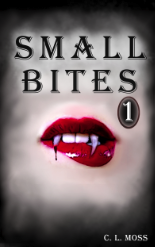
When you pick up a book the first thing that catches your eye is the cover art, and the title. If these two things do not apeal to you then it is less likely for you to read the blurb on the back, or take a moment to read the first couple of pages.

The art should reflect, and work well with, the title.

It is incredibly easy to get actual, profesional cover art for your book that there is absolutly no excuse to use a big red box with letters on it, unless your story is about a big red box. I know you drew it yourself, but if it doesn’t give me an idea of what is in the book. I will probably pass it up for something a bit shinier on the outside.

They say “don’t judge a book by its cover” but really, most people do. The cover of your book is the very first impression anyone gets of it.  They look at the cover and say ‘oh, spaceships’ or ‘a river, must be about a camping trip’, or magic, or sex. Really, your cover art sells the theme of your story.

Coverart can be aquired through the many thousands of artists that frequent Deviant Art, freelance forums, or even Reddit. There are even premade, free, covers on Deviant Art already ready for your use. Many artists only want a free e-book for their troubles. Others, the ones who actually make a living from their art, or are trying to just like you are trying to make a living from your writing, will sell you a cover. (Please remember to always contact the artist, read their rules, ask and/or let them know, BEFORE you use their art.)

The second thing people will look at is the title.

Titles are often based on something important to the story.

  • Main Character              (Harry Potter, The Hobbit, Dracula, Frankenstein)
  • A group of people          (Fellowship Of the Ring, Jason and the Argonaughts)
  • Main Theme/quest         (Star Wars, On Writing, Quest for the Holy Grail,)
  • Location                       (Serenity, Bridge to Terabithia, Africa, Matrix)
  • Subject                         (Swamp Thing, Zombie Survival Guide)
  • Or a combination           (Anne of Green Gables, Shawn of the Dead)
  • A Concept                    (Do Androids Dream of Electric Sheep?, Pride and Predjudice)

Pick out the things that are the most important in your story. People, places, subject. Now brainstorm around those themes. It always helps to have something that is in the same tone as your book. Scary for horror, funny for a comedic piece, futuristic for a sci-fi.

Sometimes the title seems to have absolutely nothing to do with the story, such as “A Clockwork Orange” or “To Kill a Mockingbird”. If the title is off beat enough it may draw someones attention enough to get them to read the preview, like “The Universe Doesn’t Give A Flying Fuck About You” (which is a motivational, surprisingly.)

Covers and titles are almost as important as the first page. If they look at the cover and it doesn’t grab their attention long enough to get them to pick it up and read that first paragraph (or online click the ‘see inside’ button) then it never gets out the door.

When Do You NOT Need an Editor?

As self publishing takes a huge surge it isn’t surprising that books keep appearing that have yet to be edited by anyone other than the author. This has, of course, caused a lot of people to think twice about reading indie authors in favor of traditional publishers. Traditional publishing comes with built in editors (with some limitations) so it is safer to assume their books will be better, at least in that way.

Editing your own work isn’t easy. It is very easy to overlook things because you are so close to the writing, and have been looking at it for so long. That is why many authors suggest you put the first draft away for a month or so before you actually start editing.

Editing can be expensive, and time consuming. (I have been quoted $1.50-2.50 a page, or $5 an article. Most editors have minimums also.) However, it is a necessary process of writing. Many new writers think they can do all the editing themselves. Mainly because: it’s free!

Free is very tempting, but on the other hand if you want your readers to come back for more, and spend real money on what you have to offer, then you need to present the best thing possible. It needs to be legible, and show some amount of professionalism. And while “spell check” is an amazing program, it isn’t foolproof. And no grammar editor has ever been spot on 100% of the time.

If you are trying to get traditionally published you may be able to dispense with editing, if you have a good grasp of grammar. If they accept your work they will, of course, go over it themselves and get anything you missed. In fact, most freelancers who just do articles for traditional publications don’t have professional edits, though they may have a friend or college who looks over it to catch errors. Keep in mind that if you have too many errors a publisher won’t even bother reading past the first paragraph.

In fact, if you paid for every article you wrote to be copy edited you wouldn’t be making much money. Just think about it… for every 10 articles you write you might get half of them published (being optimistic for a beginner). If you paid someone $5 each to edit them, then got paid $50 each for the 5 you publish you would net $200, but if you only sold one, or sell to markets that pay less, you won’t be making much at all. In this case it is really in your best interest to get a college who will trade articles with you to edit, or read everything you can on the editing process.

However, if you are going the indie route you are probably doing something along the lines of a book, or at least a short story. There won’t be publishers, editors, marketers, cover designers or anyone else unless you either pay someone, or ask a friend. This puts the power in your hands, and it also puts a of responsibility on you.

My suggestion is to start with workshops. It is always easier to see edits needed in someone else’s writing then it is to see in your own. Workshops are also a fantastic avenue of (usually constructive) criticism. And if you can’t take criticism then you really should really consider whether or not you want to risk putting your writing out to begin with.

Some things that may help in your editing quest: