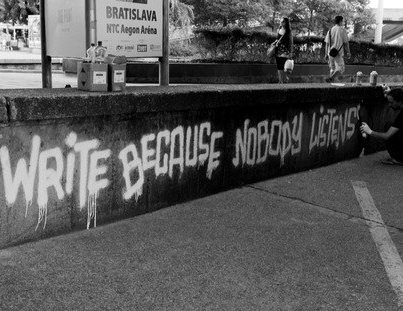
What’s the Point of it All?

What’s the point of telling a good story? Why do it?

There have been story tellers for centuries. Sometimes called mistrals or bards, other times wise old men. They would sit in crowded, smoky bars, or on dusty streets and weave stories into tales, or song for the few coins dropped in their palm. Actors would strut and fret their way across stages. Criers would call the news out to the milling throngs.

Story telling is in our blood.

Our story tellers, in this particular century, take on many forms. News paper journalists. Bloggers. Vloggers. Book authors. Music writers. TV writers. Game designers. Movie makers. D&D players. LARPers… I’m sure I’ve left something out.

What’s the point of it all?

It’s a way of passing on our thoughts. Our hopes. Our dreams. Our reality. A way of sharing the little pocket of the universe with others around us.

Sometimes it is our way of experiencing something we could not otherwise experience, like dragons, or storming Normandy during D-day, or even flying like a bird.

But a good story… a good story will make you immortal. Like Shakespeare, or Homer. A good story will stretch over time and space and engulf everyone it touches. A truly GREAT story will be rewritten, re-imagined, reworked, and re-read for countless years to come.

We tell stories because we are creative and imaginative creatures. And we must.

I have a lot of articles and want to make a book, can I?

Recently someone asked if it was possible to compile all of their articles together and make one ebook for sale on amazon. The biggest problem with this is that most people looking for a non-fic book are looking for something specific to one subject. The few exceptions are things like “Chicken Soup for the Soul”, but they are all “uplifting” stories, or “amazing facts” style books, and thus have a running theme.

So if you find yourself in that position here are some tips to help you make it into a single book.

First, ask yourself if you are trying to put random articles together, are they relevant to one another? Because if they are not then it is probable that you will have a better chance marketing them as individuals to magazines for reprint.

Look for themes. Health and wellness. Colonizing space. Agriculture. Uplifting stories. Children. Wedding.

You can take 4 or 5 articles with a similar subject and rewrite them into a non-fic book on that subject. Then drum up readers by having your book linked from your main page of articles.

So find a way for them to work together, a common theme, or subject, and make it into a book, not just random pieces put together.

Scivener

I have been taking the last week or so to convert all of my novels to Scrivener. It’s been a learning experience.

First, let me explain something. I don’t have one file for each novel. If that were the case of things would have been so much easier.

No, the novel I was working on today had nine separate files. The nine files happened over the years as I switched from Lotus, to Word, to RTF, and between three or four different PC’s. Each file had different parts. Two of them had nearly the whole thing, but each was missing some part.

I finally figured out the fastest way to compile these into one file was to open nine subsections in Scrivener, and paste each file in a separate section. Then I compared and compiled the sections together until I had each unique section, and could separate everything into chapters.

It was time consuming, but worth it. I am sure that I missed some minor things, or basic edits that I will have to redo, but all in all the time spent doing this was worth it.

Next I will have to compile this into one file so that I have a back up. But a single backup is much easier to handle then nine.

Catching Eyes

When you pick up a book the first thing that catches your eye is the cover art, and the title. If these two things do not apeal to you then it is less likely for you to read the blurb on the back, or take a moment to read the first couple of pages.

The art should reflect, and work well with, the title.

It is incredibly easy to get actual, profesional cover art for your book that there is absolutly no excuse to use a big red box with letters on it, unless your story is about a big red box. I know you drew it yourself, but if it doesn’t give me an idea of what is in the book. I will probably pass it up for something a bit shinier on the outside.

They say “don’t judge a book by its cover” but really, most people do. The cover of your book is the very first impression anyone gets of it.  They look at the cover and say ‘oh, spaceships’ or ‘a river, must be about a camping trip’, or magic, or sex. Really, your cover art sells the theme of your story.

Coverart can be aquired through the many thousands of artists that frequent Deviant Art, freelance forums, or even Reddit. There are even premade, free, covers on Deviant Art already ready for your use. Many artists only want a free e-book for their troubles. Others, the ones who actually make a living from their art, or are trying to just like you are trying to make a living from your writing, will sell you a cover. (Please remember to always contact the artist, read their rules, ask and/or let them know, BEFORE you use their art.)

The second thing people will look at is the title.

Titles are often based on something important to the story.

  • Main Character              (Harry Potter, The Hobbit, Dracula, Frankenstein)
  • A group of people          (Fellowship Of the Ring, Jason and the Argonaughts)
  • Main Theme/quest         (Star Wars, On Writing, Quest for the Holy Grail,)
  • Location                       (Serenity, Bridge to Terabithia, Africa, Matrix)
  • Subject                         (Swamp Thing, Zombie Survival Guide)
  • Or a combination           (Anne of Green Gables, Shawn of the Dead)
  • A Concept                    (Do Androids Dream of Electric Sheep?, Pride and Predjudice)

Pick out the things that are the most important in your story. People, places, subject. Now brainstorm around those themes. It always helps to have something that is in the same tone as your book. Scary for horror, funny for a comedic piece, futuristic for a sci-fi.

Sometimes the title seems to have absolutely nothing to do with the story, such as “A Clockwork Orange” or “To Kill a Mockingbird”. If the title is off beat enough it may draw someones attention enough to get them to read the preview, like “The Universe Doesn’t Give A Flying Fuck About You” (which is a motivational, surprisingly.)

Covers and titles are almost as important as the first page. If they look at the cover and it doesn’t grab their attention long enough to get them to pick it up and read that first paragraph (or online click the ‘see inside’ button) then it never gets out the door.

Tenacity and Perseverance

Writing is an act of creativity. Publishing is an act of tenacity, whether you are self or traditionally published.

If you think about it, nearly everyone writes. Letters, notes, forums, fan-fic and random snippets here and there. That takes creativity. And if you share your work via blogs, forums, or other sources then you also show your desire to share your thoughts with the world.

Publication takes more. It takes tenacity and perseverance.

Let me clarify. Many people have said self publishing is muddying the waters. Lots of ebooks get through with little or no editing. Some are poorly formated. Others have boring cover art.

But there are others who take all the extra steps. Good edits, formating and cover art. These few will likely have more then one book, and earn themselves many followers and fans because they are fighting the good fight. Earning their small part of the kingdom. And making something we want to see and read.

If they are trying traditional publications there are even more steps. Queries, rejections, more queries, agents, contracts, proofs, signings, and, at the end of the day, maybe a paycheck.

Anyone can write. To write well you must work hard. To publish you must work even harder. To succeed at it you have to be tenacious.

Stick with it, good writer. Fight the good figt. Persever where others will fall behind.

Random Words

One of my favorite writing exercises is the random word. Several years ago I joined a writers workshop that did Short Story in a Week. Five groups of five random words were given, and participant could use one or all of the lists in a short story exercise.

Random are great ways to generate ideas. Take this generator.
It gave me these words:
cheese
empire
attack
fairy
sky

The fairy empire is in heated battle with the cheese loving citizens of Wisconsin, and taking to the sky, ready to attack!

A silly sentence, but fun, and able to add more ideas.

Search for random word generators on google. If you have a specific genre you like then add that genre. Try it a few times to get the creative juices flowing.

Why Scrivener?

Over the last few years there have been a lot of people who suggest Scrivener as a writing platform, so I decided to use the free trial and see what all the hub-bub was about.

I actually didn’t get a computer until I was 21. Before that it was always pen and paper. My first computer came with an old program called Lotus Word Pro, and (of course) Word. For years I refused to leave Lotus because it had one feature no other program had.

With Lotus, you could click a little button at the top and it would show each section of your file as a little tab above the ruler. You could then group the tabs and/or move the whole tab/section around. Each section was denoted by a pagebreak.

It was awesome. It made flipping through sections, color coding and marking which were finished easy. Then I could have other sections that where just for notes, crits, maps, or random info. On the flip side, it was really difficult to convert any Lotus file over to Word, or vice versa. They just really didn’t like each other. (It is actually how I got into the habit of saving everything as RTF. Almost any program/computer is able to read RTF.)

Scrivener takes this basic premise and goes much farther. Its organized better. You can open two tabs at once and compare them. Easier to use. Intuitive. And then there is the COMPILE button. Scrivener will compile all of your sections into one file, any file you want. Doc? Mobi? Ebook? Sure… anything.

Best part? 30 (non-consecutive) day free trial (So go try it right now!). Tutorial Videos. And only $40 to keep it. Cheaper then anything else I know of, and far more useful.

After using it just for the 30 uses I realized just why so many people suggest it. So I use it.

Side note: There will soon be a “Scrivener for Dummies” book out soon. Here is an interview with the author.

Fan Fiction

Last month someone asked Neil Gaiman a few questions about specifics concerning the background of his characters. I thought his answer was beautiful:

“I think that is what fanfiction is for. Go and make it up, and learn.”

For years, many writers have argued about fan fiction. And here it is from one of the (imho) great writers of our time. “Go, make it up… learn”.

There are some great things to be said for fan fiction.

  • The world is already created.
  • There is a HUGE reader base already, much of the time.
  • You get to explore new ideas.
  • You get to use you imagination.
  • You practice writing.
  • You practice getting criticism.

What’s more, Fan Fiction gives the reader a vested interest in the world.

Remember all those little kids pretending to be Jedi, Power Rangers, or Transformers? Maybe you were one. Fan fiction is just the next step. It’s doing something you love, exploring a world you adore, and making it your own.

Legally, fan fiction is okay in most places as long as you don’t try to sell it. Some authors, like Piers Anthony and Gaiman, even actively encourage it. Why? Because they love their fans. And if you actively participate in their world through stories and art of your own you will be more likely to keep investing in it later by buying their books, or watching their (potential) movies.

Those kids that played Jedi in the backyard? They grew up to be adults who flocked to the theaters in droves when Phantom Menace came out. They still dress up sometimes and call it “cosplay“, only now they spend small fortunes to do it. (How much does a Stormtrooper suit cost?)

So, participate in fan-fic. Enjoy it. Read it. Write it. Then encourage it for your own fans. It’s good for the heart, the soul, and even some pocketbooks. But really, it just brings more life to a story, and gets people thrilled to read, and write. What could be bad about that?

When Do You NOT Need an Editor?

As self publishing takes a huge surge it isn’t surprising that books keep appearing that have yet to be edited by anyone other than the author. This has, of course, caused a lot of people to think twice about reading indie authors in favor of traditional publishers. Traditional publishing comes with built in editors (with some limitations) so it is safer to assume their books will be better, at least in that way.

Editing your own work isn’t easy. It is very easy to overlook things because you are so close to the writing, and have been looking at it for so long. That is why many authors suggest you put the first draft away for a month or so before you actually start editing.

Editing can be expensive, and time consuming. (I have been quoted $1.50-2.50 a page, or $5 an article. Most editors have minimums also.) However, it is a necessary process of writing. Many new writers think they can do all the editing themselves. Mainly because: it’s free!

Free is very tempting, but on the other hand if you want your readers to come back for more, and spend real money on what you have to offer, then you need to present the best thing possible. It needs to be legible, and show some amount of professionalism. And while “spell check” is an amazing program, it isn’t foolproof. And no grammar editor has ever been spot on 100% of the time.

If you are trying to get traditionally published you may be able to dispense with editing, if you have a good grasp of grammar. If they accept your work they will, of course, go over it themselves and get anything you missed. In fact, most freelancers who just do articles for traditional publications don’t have professional edits, though they may have a friend or college who looks over it to catch errors. Keep in mind that if you have too many errors a publisher won’t even bother reading past the first paragraph.

In fact, if you paid for every article you wrote to be copy edited you wouldn’t be making much money. Just think about it… for every 10 articles you write you might get half of them published (being optimistic for a beginner). If you paid someone $5 each to edit them, then got paid $50 each for the 5 you publish you would net $200, but if you only sold one, or sell to markets that pay less, you won’t be making much at all. In this case it is really in your best interest to get a college who will trade articles with you to edit, or read everything you can on the editing process.

However, if you are going the indie route you are probably doing something along the lines of a book, or at least a short story. There won’t be publishers, editors, marketers, cover designers or anyone else unless you either pay someone, or ask a friend. This puts the power in your hands, and it also puts a of responsibility on you.

My suggestion is to start with workshops. It is always easier to see edits needed in someone else’s writing then it is to see in your own. Workshops are also a fantastic avenue of (usually constructive) criticism. And if you can’t take criticism then you really should really consider whether or not you want to risk putting your writing out to begin with.

Some things that may help in your editing quest:

Excerpt from “Flight of the Griffins”

The egg rocked violently beneath her hands. Shivering. Cracking. Riviiana’s stomach twisted. The largest egg, the black egg, was hatching.

Riviiana had been present for a falcon hatching, but this was far more violent. She had no idea how a mother griffin treated hatchlings. Nothing but guesses about what they ate, or how often.  But judging from the lattice of cracks appearing on the shell, the hatching wouldn’t take long.

Brushing aside the straw and feathers, she made sure the egg had plenty of room. With a violent jerk a chunk of shell fell away. Inside the dark opening something darker writhed, barely visible in the firelight.

Another shiver and the crack split the length of the egg. The crack widened, a shiny black beak thrusting through. Another thrash and the two halves fell away, the griffin tumbling to the straw.

Riviiana gasped. The griffin was the size of a cat. The tiny wings and head were covered in a soft, wet, black down. A mane of short hairs covered its back, but much of the rest of it was hairless, including the four clawless paws. And it was obviously male.

The hatchling slowly lifted his head and chirped pitifully.