Adventures in Technology

sick compIf having my USBs randomly stop working wasn’t enough, my motherboard blew out last week. I’ve been computer-less for the last seven days.

But, hopefully that will end today. I bought a new motherboard, processor, and some ram which will double my computers speed and make my games so much better to play.

Going down to Fry’s and picking out all the parts with my techy friend made me feel like a fish out of water. There I was, surrounded by pieces of computers. The insides, the guts of what makes the most important appliance in my house work, and I might be able to tell you what each of those pieces were, but there is no way that I could tell you which ones fit together, how how to fit them in the right order or slot.

Cue my tech friend who pointed out which ones were good brands, which ones were faster then what I currently had (all of them since my computer wasn’t working at all, of course, but you know what I mean) and which ones were the best fit for what I wanted. $400 later, I had all the parts we thought we needed. That was at least $200 cheaper then buying a comparable PC off the shelf. (It helps to have a techy friend who knows what all the numbers on the boxes mean.)

We also spent $5 to have Fry’s techs install the processor on the motherboard and make sure everything worked.

Hint: It didn’t.

They installed the processor, and the ram on the motherboard and hooked it up to a power supply and screen. A text box that says “no OS available” should have popped up on the screen. But there was nothing.

So I ran back and grabbed a different motherboard since it is usually a faulty motherboard that causes that problem. They hooked it all up again, and nothing happened.

The next step was to test the processor. At Fry’s they keep really expencive, small items like processors inside a cage to reduce shrinkage. So the tech had to take the processor to the cage, and test it out. It is very rare for a processor not to work, so I’m told. Lucky me, we were given the one processor in the lot that did not work.

But the tech couldn’t just take the new, working, processor out of the cage. Nope, we had to take the old one back up there, and do an exchange. Again, shrinkage. Then back to the tech area where they, again, tried to install the processor onto the motherboard.

By this point they have also checked this motherboard against another processor, and he motherboard does, indeed, work. When they install the processor I bought though… nothing.

Turned out the motherboard was a year old. A year, in computer terms, is a long time. During that year the bios (the simple programing that is pre-installed on a motherboard) had been updated five times. Same motherboard, different bios, which meant the older version couldn’t comunicate with the newer processor. And the only way to update the bios was to install an older processor and connect it to the internet, or a driver, something the techs at Fry’s were not allowed to do.

So, back to the motherboard section to pick out a newer model. I scanned the shelves and all of them said $130 or more. The one we picked out had only been $70. That meant I’d have to pay the difference. Le sigh.

Then my tech friend picks up a smaller box right above a sign that says “$40”.

“Isn’t that for a mini computer? That wouldn’t fit.”

“Actually, it will. It’s got the same screw configuration so it will pop right into the case you’ve got. This one has two less slots, but were you going to fill those slots anyway?”

We discuss it. $80 a piece for ram, and the one I picked out was already an 8 gig stick. No, I probably wouldn’t be able to get three more any time soon, but I could probably buy one more later, which meant this new, smaller motherboard would save me $20, and I’d still have room to upgrade. PLUS, when/if I feel like it I can get a smaller case (about $60) and make a mini PC that will fit on the corner of my desk. I like how this sounds.

We go back to the tech area and they test out the mini board and the processor before we bother with the exchange. Couple minutes later the light comes on the screen. “No OS detected.” IT WORKS!

Only thing left was the exchange, which actually meant refunding the original mother board and getting store credit, taking he store credit back to the cashier who used the store credit to buy the new mother board, and then putting the rest of the store credit back on my credit card. A bit of a circuitous route, but I still got $20 back, and all the parts I needed for a new, faster machine. YAY.

All in all, I’d say that $5 service charge to have Fry’s techs install the processor was well worth the money. Ya, we were there for two hours going back and forth and figuring out what was wrong, but it would have been so much more trouble if we had left with a broken processor that didn’t even speak the same language as the motherboard we got.

For the first time I can say I really like a big box stores tech support. Go Fry’s!
Progress?

Some days it feels like you’re not making any progress, when in fact you are.

Take today. I wrote a messily little 130 words so far. I’m probably going to write a little bit more, but it won’t be a lot since it’s already past midnight. However, I did go through my entire manuscript and clean up a lot of the grammar errors. Changed the then’s to than’s. Got rid of double spacing. Made all the “…” uniform. Took out all the double words.

It wasn’t a major edit, just a superficial one, but one much needed. From here on out I will be going through each chapter and doing a major cleaning up of word usage. Not a true edit, since I still need someone else to correct the spelling and grammar errors, but just making the words read smoother. This basic once over to clean up all the really easy to spot things will make that go through a little easier.

Progress is more in how you see things then how you measure them. I usually measure progress by word count, but some days I do an awful lot of editing, formatting, and cover design. This leaves no time for actual words on page. I know I should set at least one hour aside every day to just write, but sometimes your brain is so overloaded with everything else that you just can’t write. That’s when you have to measure progress in another way.

I’m going to be adding other accomplishments to my word count sheet. Maybe it will just be a note that says “marketing” or “art” for the day. Maybe it will be something more specific. But it feels a lot better to look at the spreadsheet and see “I didn’t waste my time playing video games that day, I actually did something productive before I played them.” (Because a girl has to have her video games, right?)

How do you measure your progress? What do you do on days that you feel like you’ve done nothing, even though you know you did a lot?

I’d like to teach the world to sing….

I had this conversation with someone today on reddit, and I’d just like to share it. After writing it I felt so proud to be part of the indie community. And if you are an artist, writer, story teller, or just someone chasing your dreams… you should feel proud of the community of creators we are building too.

It isn’t a contest. We aren’t at each others throats vying for the top. We are friends, and coworkers, helping one another because we are also helping ourselves.

************ the conversation ***********

In response to my assertion that “the arts are skyrocketing” and a person should follow their dream, another redditor replied:

I agree that we have a lot more avenues to express our creativity.  And, it is easy to reach a lot of people. I also believe that supporting local economies is good. But I wonder about ‘skyrocketing’. Is this a growing viable industry, is that what you mean by ‘skyrocketing’? Do most people make good money or even a living?  Or are most folks ‘starving artists’ that would be considered as hobbyists to the business world?

My reply:

I am mainly familiar with the self publishing book world since that is where I am working.

Ten to fifteen years ago, before Amazon opened up publishing to individual authors, the best a writer could do was sign with a publishing house. Most houses would pay 10-15% royalties on a book. They would miss payments, miss count, hide numbers, and basically the publishers made bank while the author made crap. A large portion of authors, way back then, had to have a second job because what they were making through the publishing company couldn’t really pay the bills. They were limited to one book a year. Often signed to contracts with “no compete” clauses so they couldn’t sell anywhere else. And a big part was that there were only so many publishers with so many open book slots each year, and more authors to fill those slots then slots available.

Then Amazon came around. They give their authors direct access to publishing, pay them 70% royalties, and let you do everything yourself.

There are MORE writers now that actually get books out into the world then there ever were before. And they are selling! Things no publishing house would touch because they were cross genre or off brand are now selling millions of copies. Authors, for the first time ever, have a real chance to make a living doing what they love.

I know several dozen authors who make a full time living from writing. They quit their day jobs. And now they just create art. I know about hundreds of other cases and there are reports of thousands of authors who all write full time.

Amazon, smashwords, kobo, and all the other platforms have opened up a world to people who were once hampered by what the publishing industry dictated.

And others are succeeding because we, self published authors, are succeeding. We hire freelance editors, illustrators, voice actors, formatters, personal assistants, and more. Just because we love to write, and people love to read.

Now a lot of authors are starting to hire graphic novelists, animators, and film makers….

Yes. from where I sit, the art community is sky rocketing. We are sharing the wealth. We are encouraging indie development, and teaching each other how to succeed. There are free podcasts, tutorials, and ebooks out there for anyone who wants to put in the hard work to become a self published artist, writer, musician, filmmaker or whatever. And we as an indie community understand that the more our fellow creators succeed, the more we succeed.

It’s kind of a beautiful thing, and I am so happy to be part of it.

The Importance of Diversification 

If you’ve been reading this blog for any amount of time, you know that I enjoy the Self Publishing Podcast. They are probably one of the big reasons I finally have books up on Amazon. They are probably also a huge reason I keep plowing away at this novel that I’ve been working on since October. That, and the support of my friends, and my boyfriend, who all keep telling me I can do this thing.

The guys over on SPP talk about email lists a LOT. And they aren’t the only ones. Several of the authors interviewed on SPRT, Rocking Self Publishing, and Story Telling Podcast all say you should have an email list.

I resisted for a while, mainly because I didn’t think I could do a good job of it. I enjoy doing my blog, and sharing things through this medium. I figured if anyone really wanted to know what I had to say they could read my blog, or hit the subscribe button above, or at the very least subscribe to twitter where I announce everything. And lots of people do.

But it was something Johnny said on one of the latest SPP’s that really hit home. By not having a list I am risking everything going away, and none of my fans or readers will be able to find me. What if Amazon suddenly decided they didn’t want to do indie books anymore? Or what if they changed the terms of service and I couldn’t stand them anymore? What if wordpress just up and lost all of my old posts and accidentally deleted my blog? It could happen.

So really, I’m doing a disservice to my readers by not having a main mailing list where you can get basic information each week, or every other week.

Plus there is just the idea that diversification means more opportunities for us to talk and get to know one another. Spreading out my cyber wings, so to speak, and letting people get more chances to see something new and interesting.

So.. I’ve got a mailing list. Sort of. I signed up for it, and I’m figuring it out. Hopefully it will be available within the week.

If the Water Company Acted Like Comcast

I tried to come up with an understandable analogy of why Comcast, and the other ISP’s think it’s okay to put data caps on everyone. (You do know they are trying to do that, right?)

This is how I understand it…

Say a water company puts in a two inch line running down a specific street. It’s okay because there are only a couple of small houses, no pools, and no businesses down that street. Everyone can use as much water as they like. Not a problem.

Time moves on and a few apartment buildings spring up on that street. And a business with a huge water fountain. A few people put in pools, which takes away from the business of the water companies indoor swimming pool, too.

Same small two inch pipe serving all those houses, but now there are days when the water runs at a trickle. Other days when some of the houses at the end of the street can’t even take a shower.

The water company knows it could just come in and put in bigger lines. More water available, everyone is happy, and their water bill doesn’t change much because it’s still the same water.

Or, they can ration it. Rare items are worth more, right? Plus putting in bigger lines would cost money and drop their profit for the year. Bigger lines would also open up opportunities for bottling companies to come in and put out bottles of water, taking some of their profit. It would encourage more houses to add pools taking away from their indoor pool revenue. What if an ice factory moved in down there?

“I know,” says an exec at the water company, “lets just give our customers a choice. They can pay for the lines to their house to be upgraded, giving them extra water if they like, or they can deal with what they already have. Lets also put a cap on how much they can use so we can try and limit the growth of fountains and swimming pools in that part of town. We’ll also get a revenue boost from those going over the limit. Win win.”

So the company with the big fountain, and lots of money, pays for construction workers, plumbers, and contractors to get an upgrade on their building, but the little houses at the end of the road can’t afford it. All of that work costs too much. So they deal with the low pressure water, and days without showers even though they really want the upgrade. They give up their plans of getting that pool because the overage on water would just be too much. Besides, they can just go swimming at the club down the street, right? It costs $20 a day, but it’s the only swimming in town.

The exec’s at the water company look at their spread sheets, see very few customers upgrading, and reason that it really isn’t as desirable as the people keep wining about. Some of them are still going over the cap, which means more profit for them, but that’s all for the better.

So… it’s a combination of greed, unwillingness to update lines, and customers inability to force the companies to do it. It results in a scarcity (or false scarcity) of product, high prices, caps, and little to no competition. And since they also own the cable companies… well why the heck would they want you to watch netflix if you can just turn on cable TV?

I know this example doesn’t translate exactly, but it does show it’s not just one thing causing caps. It’s a bunch of things. Specifically an engineer told me bandwidth behaves less like water (which is pressurized) and more like traffic. The more traffic on the road the harder it is to get cars (packets) through.

However you look at it, the fact remains: ISPs could choose to upgrade their infrastructure. They were even given money from the federal government, or tax money, to upgrade and they didn’t.

Draw your own conclusions.

Around the web

Just a little update before I get to the interesting articles I’ve found this week.

My computer is out being repaired, so hopefully that means things return to “normal” in my writing life.

I am at 62,000 in my “Mermaids Curse” manuscript. That’s not even close to where I wanted to be right now. That’s partly because of the computer, partly because some stressful things popped up in my personal life that had to be dealt with before writing, and a little bit because I’d look at the chapters and go “what the hell do I do now?” Thankfully most of these issues have been dealt with and I’m back to the (mostly) regularly writing schedule.

Lastly, I recorded an “Indie News Bites” but I didn’t have a way to edit it, and it sucks without at least a little editing, so that won’t get out till the day I get my PC back.

I will have a news letter that you can sign up for starting next week. The “Around the Web” will probably be one thing added to the news letter.

Now for you’re dose of Around the Web

Facebook buys Oculus Rift for $2billion

11 Strange Books (all traditionally published).

The unwinnable Choose-Your-Own-Adventure

The Choose-Your-Own-Adventure in Skyrim

Harvard has at least three rare books bound in human skin.

Amazons “most wished for” section.

Reddit discusses some future tech that may actually become reality

What is ‘Evil’?

Last night on “The Story Telling Podcast” we were talking about what makes a good villain, and making them less cliche. So I started to think; What does ‘evil’ really mean?

The idea of something being inherently evil isn’t new. Man started walking upright and venturing out of their caves and into open land where more food was available, but so was more danger. I am sure the various monsters of the time trying to eat them seemed ‘evil’.  As they developed into societies they also had to worry about rival bands of early hominids. Wolves, bears, and lone people out in the deep forests. That is why most of the villains in old fairy tales are woodland creatures and witches in the woods.

But society has changed. We now have scientific understanding of how ecologies work, and how to avoid danger in the deep dark woods. We know how to light up the night so they aren’t as dark anymore. Those old fairy tales that use to scare our children into avoiding “the evil places” aren’t relevant to our modern age. The idea of ‘evil’ has changed, just as we have.

Now our biggest fears are natural disasters that we can not anticipate or stop, and other people.

If you watch the news it is clear that the world is polarized as to who they think is really ‘evil’. Extremist religious groups blame other religious groups. One country blames another nation. Politicians blame social media and ban twitter or Youtube. Corporations blame taxes. Poor blame corporations.

So who, or what, is really evil? Who is capable of really deciding?

Religious folks will point at god, and say god decides. But which god? There are so many to choose from, many of which teach similar things, but none of which are in full agreement. Then you add in the fact that interpretations of religious text has shifted over the centuries as culture has shifted. That is as evident as the multiple branches of EVERY religion now seen. It doesn’t matter which religion you look at, Christian, Islam, Buddhism, pagan… they all have sub sects that have differences in their belief structure.

The scientific minded among us might look to culture, but culture shifts and turns. Culture depends on so many facets of human development. Just ten years ago we still taught our children “being gay is wrong”, now several states have gay marriage, and the number is growing. And while I admit that it seems like the spread of some religions is part of the reason being gay was deemed  “wrong”, it isn’t the entirety of it, and it will take a lot of work to fix the damage done.

What is evil? I think the simplest answer is “that which threatens a persons livelihood.” Be that a wolf trying to eat you in the dark forest, a rabid st bernard named Cujo, a wall street tycoon sucking up every last dime he can at the expense of real jobs, or someone taking over a plane and flying it into a building.

Evil is in the moment. It is dependent on a myriad of circumstances in our lives, and while one finds it evil another will hail them a hero. The tycoon doesn’t think he’s evil, he thinks he’s doing a fantastic job and won at life. The man in the plane thought he was striking a vicious blow at the capitalist pigs. Cujo was only doing what the virus told him to do.

Or ideas of evil change as we change. So do the creatures in the dark. Of all the creatures that haunted our dreams (vampires, werewolves, and witches) only zombies seemed untouched. Movies sprang up and they were just as scary as before. No zombie with sexy eyes, or illicit love affairs. No zombies trying to make peace with the humans. Just masses of rabid creatures that once looked human.

Until “Warm Bodies”.

So many of our dark creatures have been changed into something that was just misunderstood, and now we can be friends. Or if not friends, grudging allies. Now all we have left to fear is each other, and maybe the technology we create.

If evil is “that which threatens a persons livelihood” then the only thing more evil then humanity is time itself.

The Circle of Creativity

There is a wonderful book called “Steal Like an Artist”, and I read it once, a while back.

It seems like such a simple thing. As an artist working in paint and pencil our art teachers started us off by having us replicate other artists work. Musicians start by learning scales and move up to covering some of their favorite musicians, or some of those considered the best in their industry.

In fact if you go back to classic Renascence paintings you will see many with the same theme, or pose. A few are quite clear that the copied another. Van Gogh copied Millet. A large percentage of music all use the same four cords, all the way back to Pachelbel. We won’t even get into all of the movies influenced by other or outright remake them. Then there is Shakespeare’s Romeo and Juliet, and the thousands of adaptations.

Art, all art no matter the medium, is a flow of thought and action. It is the combined totality of all that we’ve known an experienced. All that we’ve watched, tried, emulated, and retold.

But to learn to produce your own art it usually stars by imitating old art. Writers will try writing fan fic, or write in similar styles to authors they enjoyed reading. Artist will try reproducing techniques, images, and variants that they see in other artists. Musicians will practice their favorite songs before they start writing their own. Even game designers will start by programming simple games before striking out on new adventures.

Yes, there are the occasional creators that come up with their content very shortly out of the gate. But I would say that is more rare then creators who mimic before creating.

Think of it like a child. When you are a baby you don’t blurt out whole sentences. You say sounds, then words, ten mimic people around you. Finally, after months of practice, you start saying whole sentences, then paragraphs and stories of your own. The creative process is much the same.

And then it circles around. The things you create inspire the next generation of artist. The things you create will inspire new creations. Then you’ll consume new art and experiences from new areas and that will influence your continued growth. As long as you are living you are gathering new pieces to add into your canvas of creation.

So don’t be afraid to mimic now and then. I happen to know some great movies that started by making fun of some existing movies. I know a couple of books that came about by mashing up ideas from other books.

And if you’d like some more inspiration, I really suggest reading “Steal Like and Artist“.

That’s What He Said

I use to use google reviews as ways to check out new businesses. They aren’t scammy like yelp. But right now my company is trying to get google reviews. And boy are they pushing it.

“Look at this as an opportunity to practice promoting yourself” said my boss. He knows that I’ve published books, and that I’m struggling with getting noticed, reviews, and basically anything that says ‘hey look at me, I wrote this, you should read it’.

And he isn’t wrong.

It’s incredibly difficult to draw attention to myself, or anything I do. It goes against everything I was trained… stay unseen. Stay unheard. Your opinion isn’t valuable. No one cares. You’re not worth it. No one likes you. No one will ever love you.

So I find myself confronting all these things I heard for all of those years. And some days I make little breakthroughs and I can say ‘see, I did this and I think it’s good.’ (Well, mostly I say I think it’s ‘okay’ because I don’t want to disappoint anyone.)

And other days I freeze. The words get stuck on my tongue. I want to run, hide, cry, and just get everyones attention off of me somehow, anyway possible.

I recognize that this was caused by years of abuse. I recognize that the whispering in my head telling me that no one cares, and no one wants to hear what I have to say isn’t right. DEPRESSION IS A LYING BASTARD!

Half the struggle is recognizing this. Before I knew why this was happening I let my fight or flight system kick in and I would retreat. Get quite. Go unnoticed. After 30+ years of practice I’m really good at it.

But I don’t want to be that person anymore. I want to write, and I want to share my stories with people. I want to know that my words will live on even when I’m gone. I want to inspire others to follow their passions, and their loves.

And really… I don’t want to be broken anymore. I don’t want what he did to me to be what dictates my life from here on out. This is my life, and I am worthwhile, and I have something amazing to say. People do want to listen to me. They do want to talk to me.

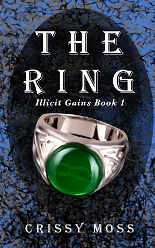
So… I wrote a book. And I’m really proud of it. I hope you read it some day.

image

How do YOU find new books to read?

I stopped by the library today to drop off old books, and pick up a couple of new ones. Because I just watched this Neil Gaiman video yesterday about how we find our books, and what piracy really means, it got me thinking…. How do I really find new books and authors?

First, the three books I picked out:

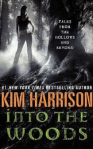
harrisKim Harrison’s, “Into the Woods”. This is a collection of short stories from the Hallows series, and I absolutely LOVE the Hallows series. I’ve read every single book I’ve found, tracked down the graphic novels, and even own a couple. While I describe it as “A female Harry Dresden” that only scratches the surface. But, like Jim Butcher, Harrison is a FANTASTIC author who adds lots of sub plots, lots of emotion, and great twists that keep you coming back for more. So of course I got it.

briggsPatricia Briggs’, “Frost Burns”. This is another series that I’ve read all of. At least I’ve read all of the Mercy Thompson novels. I haven’t gotten into the Omega or Alpha series because really I just love Mercy Thompson. While not my favorite, Briggs is a great writer, and I really enjoy her books.

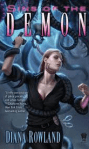
The third book is by a new author. New to me, anyway. Diana Rowland writes the “White Trash Zombie” novels. I happened upon her by browsing the “new” section at the library, and the cover looked really interesting so I picked it up. From the title I really didn’t expect anything but fluff, but I was nicely surprised. Angel, the zombie, struggles with everything a normal girl struggles with, plus her natural desire to eat brains as well.

rowlandThey didn’t have another zombie book at the library, so this time I picked up “Sins of the Demon“. The cover looked interesting, and I like her style of writing, so I thought I’d try it out.

So, the question… how did I find these writers?

I found Kim Harrison when a friend of mine suggested her book. She owned ALL of them, so I borrowed the first in the series and I was hooked. I even went to facebook and followed Harrison. She’s a really awesome person, likable, witty, and smart. She loves getting direct feedback from her readers on cover art, and other things. Win-win all over the place.

A Patricia Briggs happened to be on a shelf one day when I was sitting in a library between classes at the college. I was bored, and it was there, just sitting on a “suggested reading” shelf. It talked about werewolves, and the girl on the cover had a very no nonsense look about her… so I picked it up and started reading. I ended up checking it out and taking it home for the week. Came back for more, too.

The third one I found while browsing the “new arrivals”. I do this a lot, looking for new books with interesting covers and descriptions, and seeing if I can find anything to strike my fancy. This is one of my favorite ways to find new books since the new arrivals shelf is a miss match of every genre, including non fic, and I love all of it.

I do buy books, often ebooks, but I usually only buy new books from authors I already like. I only by print books from authors I LOVE, or from used book stores where I can find little known, or forgotten books for less then a dollar.

I have to agree with Gaiman. Free books are POWERFUL. Pirated versions are just more opportunities for people to find your books. I know the majority of new authors that I’ve taken a chance on were because of free, or really cheep books.

I’d love to be able to buy, or even read, all of the books by all of the authors I love, but that would take a LOT of money. So when I publish my own books I keep this in mind. I want more people to read my books, and maybe they will buy a few. Maybe they’ll get print copies and then give them away. Every new set of eyes on my books, every person who tells someone else how great this particular book is, that’s one more potential person who might look into my books.

So, in that spirit, if you haven’t read one of my books and you’d like to just send me a message and I will be happy to send you a PDF, or mobi file of one of them for free. Just look at my book shelf here, and send a message to crissymoss AT gmail DOT com, and I’ll get it to you shortly.