Why not both?

book vs kindleWe see it a lot these days, “Ebooks are killing print books!”

They pull up stats, and show us how ebooks are starting to outsell physical books. Physical book readers fight back and say how awful ebooks are. Then we get more stats from publishers saying print books are outsold ebooks. Back and forth like an endless yo-yo.

Why can’t we have both?

Ebooks are convenient. I love the fact that I can take my kindle filled with a thousand books anywhere I go. I can read on the bus, at the park, poolside, or just during my lunch at work. The text and e-ink are easier on my eyes then the computer screen or smart phone, and I have a paperwhite so I can read in bed with a low level of light if I really want to. If text is too small I can adjust that. If text is too big I can adjust that too.

But I have to admit that my digital collection of books isn’t as awe inspiring as my physical one. I don’t rush to see my own book on kindle, I want the paperback in my hands so I can show it off. I like the smell of old books, and the look of their covers on my shelf. I love having a non-fiction paper book that I can write notes in the margins, highlight, and fold pages. Bookmarks in kindle aren’t quite the same.

The music industry is a fantastic counter example of where the publishing industry is going. They had iTunes, then other music shops open to regulate prices. We had Amazon. They had access to iTunes, soundcloud, and other services where indies could go straight to the public, we had Amazon, then Smashwords, and others. They struggle with the same “go free or don’t go free” quandary that faces writers.

Just as writers can see a correlation with their indie writers, readers can see a correlation to their music lovers. CD’s, and even LP’s, have not faded away to obscurity because of MP3’s. On the contrary, they have become collectible, sometimes specialized to give them greater value to the listeners. While lovers of great music continually search out the new, and fill their technology with MP3’s they are also sharing, buying, and trading CD’s and LP’s.

Why wouldn’t books do the same? Print books aren’t going to disappear into the ether. There will always be those who shun technology, who can’t afford it, or simply enjoy the feel of a good book.But like music book publishers are going to have to be a little more creative in how they market, or stick to the big boys who sell the most books. As print on demand becomes easier, and even more cost effective, fewer bulk books will be available.

One of the biggest markets hit by the change in the music industry may have been music stores. Many of them failed while others changed their model, becoming more specialized and catering to specific crowds. Book stores are doing the same thing. While Boarders disappeared Barns and Nobel adjusted their business model and is surviving.

It’s nice that music lovers no longer care if it’s digital or physical. They’ve gotten past the logistic of how their music gets in the hands of the fans and just gone on to make great music. Hopefully that will soon be the case for authors and readers as well. Then we can get back to the business of writing good books, and getting them in the hands of those who love to read.

Wide Release

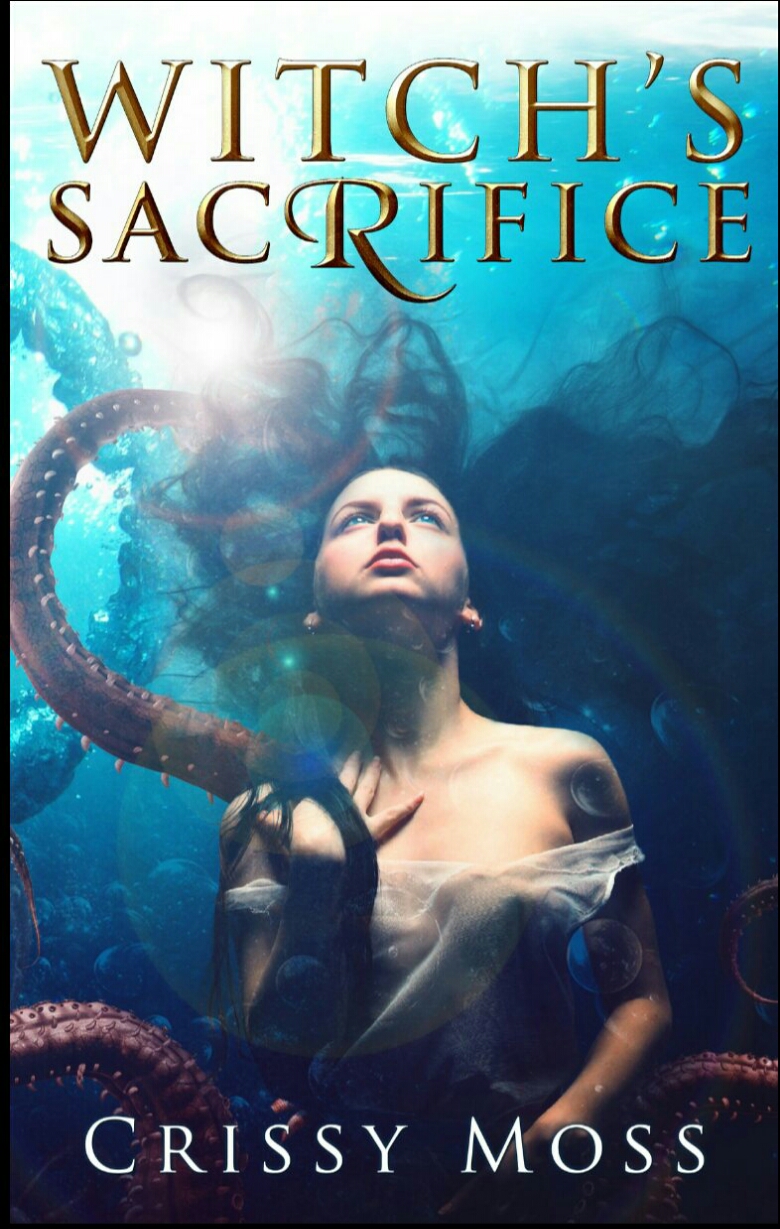
wpid-wp-1427063101748.jpegThis is the first time that I’ve actually put a book up on ALL the platforms.

Paperback on createspace, kindle, Koboitunes, B&N, then Draft2Digital also had Inktera and Scribd.

Is it useful? I’m not sure yet. I’ve never had a book on most of these sites. I still haven’t figured out how to post a book to google books. At the very least maybe someone will notice it and pick it up now and then. I’ve had books up on Smashwords and Kobo before, but really the only place I’ve sold many books is Amazon so…I figure it isn’t a bad thing to have them all out there.

Draft2Digital was surprisingly easy to set up and use. I know people have said it was, and after trying to get through the meat grinder over at Smashwords I just didn’t believe them. It was incredibly easy though and everything just went through without a hitch.

So…the book is out, the book is beautiful, and I can’t wait to get my own copy (of the final version) in the mail to stick on my shelf. It even has a map of the world so people can follow along in the journey!

This experience has been all about learning. With the short stories I already have out it was a lot simpler. They are often just one story, no need for chapters, maps, or major formatting. The trick with short stories is about telling a cohesive and compelling story in few words. With long format, like this novel, it’s about immersing the reader in the world, and sticking with that immersion for quite a while. Formatting consistency helps with that. Going from one chapter to the next and seeing the same images and typography. Making sure you don’t accidentally have a type change on the next page.

There is just so much to do. So many little things that can go wrong. And one little thing isn’t too bad, but thousands of them is TERRIBLE and will cause you to fail. So you have to carefully go through everything over and over again until you fix all those little things. Like the name that was spelled wrong even after three edits and my own proof reading. Or the time I formatted it with the wrong page size. Or trying to get the map to lay in the book JUST RIGHT. All those little things and more.

This means that I have to finish the next two books. I’m just glad they are already mostly done, lol, because this process takes a while.

What I’ve Learned

In an interesting post today on G+ John Ward ask us “What have you learned, and where did you learn it?” He wanted sources. The idea is that others might learn from that source as well. It’s a fantastic idea, but I’ve got a LOT of sources, so I am going to list them here on my blog instead of in a reply on G+.

Self Publishing

So the big one, self publishing. I didn’t know self publishing was really an achievable goal until I ran into The Self Publishing Podcast. They introduced me to several other podcasts like The Creative Penn, Rocking Self Publishing, and The Sell More Books Show. All of them are fantastic resources on the publishing mindset, marketing, and strategies to get known.

Publishing the Traditional way

Before self publishing there was traditional publishing. I actually went through quite a bit of that back in 2000 trying to get that prestige. (I’ve had several articles and a short story published in magazines, mostly Queensland Fantastic that use to be in Australia.)

To figure out how to do all of this I relied mainly on one book. How to get Happily Published. It was the most informative step by step book, letting me know exactly what to expect, what steps I needed to take, some helpful suggestions on getting the words right, and how to format the manuscript correctly. Great resource, if you are going trade publish I highly recommend it. The Writers Guidelines is also useful to find various publishers/addresses/etc, but a lot of that is also available online.

World Building

I love world building. From sketching maps, to creating new races and creatures. I love building up a society from the ground, and making the world flow together. BUT! In order to do all of that you need to have some basis in reality to build upon. You need to know how land and weather work. How different ecology’s boarder each other, and creatures might develop in those places. You have to figure out how governments, religions, and societies work together.

The only classes I felt really helped me in college were the classes regarding history, and anthropology. But I’m not going to recomend you go to a college when you can learn the same thing via documentaries and books.

One of my favorite books about the simplest thing is Salt: A World History. It’s amazing how much of our history of exploration, war, expansion, and industry revolved around this simple mineral. On the same vein, How Beer Saved the World (video) shows how man may have gone from hunter/gatherer to agriculture because of this wonderful thing called beer. Again showing how the small things effect the grander scale.

I also enjoyed books on competitive religion, astrology, mythology, astronomy, physiology, economy, ecology…. Just everything. Non fiction books and documentaries are wonderful treasure troves when fleshing out how own world and I found that every time I read/watched something new I had a little tid-bit to add to my worlds. This isn’t something you get all at once, it is from a lifetime of gathering little bits of information. Watching, observing, and internalizing, and eventually it just congeals on  your own story. It isn’t as though I plan for certain aspects to come out, they just often are there and only later do I realize that it was inspired by a specific thing I read long ago.

I’m not sure what else anyone else would be interested in. If you have any specific thing you’re looking for a refrence for let me know, I might have come across it at one point.

Also, I do have a page of references available here with some other little things I didn’t mention.

What is short fiction good for?

Back in 2012 I wrote a lot of short stories and published them inside anthologies. It seemed a reasonable thing to do. I had the stories. I just learned about self publishing. May as well, right?

Lately I’ve been working on novels. I want longer works available on amazon, and really I’d like a full length book sitting on my shelf with my name on it. Plus they atract more readers then shorts do.

But I’ve looked at those short stories from time to time thinking “there must be something I can do with them.”

The prevailing thought seems to be “give them away,” and I’ve done some of that. I have several available on my wattpad, and my website. I don’t mind giving away my work, but I’d rather do so with the intention of sending readers to something larger.

Which is the second thing you can do. Many authors give away smaller stories (shorts or novellas) that take place in the world of their novels. This gets people interested in their world, and might get them sales. An agreeable method. However, most of my short stories are stand alone thus not fit for that.

Magazines are another possiblity. Some of them pay well, and there are several search engines to help you find the best magazines for your story. The down side is that many of them want first publication rights, and very few of them will pay to publish a work that is less than 2000 words.

Anthologies are a useful alternative. I’ve gotten several new readers through my short story collection. You can pay a group of short or flash fiction on amazon, and the other retailers for $2.99, but they don’t sell as well as books. I have found that making them perma free to get eyes on your work is the best use of some of them, but perhaps not all of them.

Then today I heard of a few new websites… Websites that pay for content, for short stories, and are even specifically looking for flash fiction.

http://dailysciencefiction.com pays 8 cents a word for stories under 1500 words. It has to be science fiction, and flash fiction.

https://quarterreads.com allows authors to upload stories and essays that are under 2000 words and once approved they pay you 22 cents per read. It costs the reader a quarter. That’s 88% royalties.

A few years back I was part of an online community called Red Paper that was the first to do these sort of micro transactions. You paid in at least $5 to get an account with some credits, and used those credits at your discretion. It was a wonderful community and I made a little money from it, but it was limited, and before it’s time. Now micro transactions are an every day thing. I mean look at Candy Crush!

I would love to see more websites and/or apps for this. There are still people who enjoy short fiction. I’d love to see more things that cater to the short fiction reader.

What is slow?

I just read this article about slow writers, and their place in the current Amazon world. They make some valid points about certain authors who advocate for writing fast and not editing. I also advocate just getting that first draft out and on the page, and then turning it over and writing something else. That is because a person who writes often, and a lot, has more practice then someone who does not.

But I digress, the question today is “what is slow?”

I know the guys over at Self Publishing Podcast can crank out the wordage. They managed to publish quite a few books last year. I think they are slowing down this year to focus a little more on their brand and put a little more time into their writing, but even then they still crank out more words in a month then I do in three.

Dean Wesley Smith writes TONS of words every single day. He also advocates Heinlein’s Rules about writing fast and not editing (unless your editor tells you to.) He has some great reasons to do so. He also has good examples of published writers who do write incredibly fast. Nora Roberts, Stephen King, Ray Bradbury and every other author on this list. From authors that wrote a short story every week (because no one can write 52 bad short stories) to those who wrote several novels a year.

Then there are others who wrote one single book and earned great acclaim. Withering Heights by Emily Bronte. Black Beauty by Anna Sewell. Gone with the Wind by Margret Michelle. Invisible Man by Ralph Ellison. All books that have made their way into the national culture, film, cartoons, spin offs, etc.

A huge difference between Ralph Ellison and Stephen King… One makes a living as an author. The other made his living in other things and also wrote a fantastic book that has inspired generations. Not to say that Stephen King hasn’t written some wonderful things, some of which might inspire others along their path. Ray Bradbury, Philip K Dick and Isaac Asimov were all extremely prolific authors who made their living writing. Their works are now considered classics that will inspire and influence our culture for a very long time.

To me I suppose when I say I am slow it is because I am unsatisfied with how quickly I am writing. I know I can do more, spend more time at it, and get the ideas out of my head and on to the paper.

I think if you want to make a living at being a writer then you have to write enough to sustain that career. Every author who has come forward to say they are currently making a comfortable living off of their writing has said the same thing: they write almost every day, and they write a lot. You can not sustain a house, cell phone, car, water, and electricity off of one book in a lifetime… not unless that was a REALLY good book. And striking that really good book isn’t likely. It happens to one author every couple of years. Do you know how many authors there are out there right now?

There is something to be said for writers who are still learning their craft, honing their skills, and fine tuning their instruments. A pianist doesn’t go out to play in front of a crowd until he’s had years of practice. And those of us who started writing as children have an advantage. We had those years of honing our skills while others were out playing kick ball and hop scotch. You, the beginning writer, need to take that time to hone those skills and become more comfortable with your words. Take that time, get it right, and then decide what you want to do with those words. What level are you comfortable at.

There is also room for the part time author. The author who has a “day job” while they write. (That’s what I’m doing.) I am still an author. That is how I think of myself, and how I introduce myself, because that is what I am even if I don’t make my entire living off of it.

How slow is slow? That depends on your goals. For me I feel slow because I know I can do more, and I feel that I need to because I want more then anything to be writing full time. To get out of the rat race once and for all. I need to write faster, which for me just means less time gaming and more time on scrivener.

But you have to make your own decision. You have to find what your comfortable with, and decide if that fits the life style you eventually want. It might mean you are perfectly happy with exactly where you are. It might mean putting in extra hours every week to learn that skill, to get better on your instrument so that you can finally play for the crowd.

(Also listen to this great podcast with Neil Gaiman who comments on the subject of writing every day, finishing, and breaking through the wall.)
I’m a book snob!

A few months back I got an email from Amazon reminding me that the book I pre-ordered is now coming out. I was kind of surprised. I don’t generally pre-order anything. But I looked up the book and discovered it was the XKCD hard copy of “What If?“, and thought I probably ordered it for my son (since he’s very sciency) so I kept the order.

I love the book and I’m glad I bought it. Every so often I pick it up and just read a few of the questions for those bite sized chunks of science in a slightly funny tone.

Then there was “Choose Your Own Auto Biography” by Neil Patrick Harris, “You’re Never Weird on the Internet” by Felicia Day, and “ASAP Science; Answers to the Worlds Weirdest Questions” by the guys over at ASAP Science. “The Art of Asking” by Amanda Palmer. All of which are books I would love to read. All of which are books I don’t necessarily want to buy. At least not now at their price.

Most of these individuals made their name famous by doing things on their own. Felicia Day made a web series that is highly acclaimed on her own. ASAP Science is a well known youtube channel that they did on their own. Amanda Palmer has a fantastic music career that she became famous for ON HER OWN. And each of them went to a traditional publisher (or they were probably approached by the publisher) to do their book. Each time I heard this I was slightly disappointed. These well known figures who lead the “do it yourself” community … I guess I wouldn’t say they sold out, but they didn’t stick with the indie vibe that got them where they are today.

And I can’t say I fault the various authors for going with traditional publications. They get an advance, they don’t have to deal with editors, illustrators, formatters, etc, they don’t have to pay for everything up front. They just have to write it and hand it over and maybe go on some book tours. I get it, and I might even do it if I got a good enough advance (and liked the contract enough).

Besides the fact of losing their indie feel, there is the price of the books. $18 for print, $13 for ebook, and that’s with amazon’s discounts. “What If?” is a little older so there are used copies, but still… really? $13 for an ebook?

I think I’ve been spoiled having $2.99 to $5.99 ebooks. I look at those prices and think “If I buy that book that means I can’t buy the three other books on my wish list.” So they are sitting on my wishlist till the day they either go on sale, or I convince myself it’s alright to spend that much on a book. (Or maybe someone buys it for me for Christmas.)

Here’s the thing… I don’t even spend $15 on my video games very often. With Humble Bundles and Steam sales there really just isn’t a reason to pay more then $5 for most games. The few that I do get that are over $5 I wait till they’ve been out a while so I can see some game play, and hear some honest reviews about what the game is really like. I want to KNOW I will like the game before I ever spend the money on it. And the few AAA titles that were close to $60 when I bought them I had some hands on game time with before I ever purchased them. (Thank Star Wars Old Republic for that one. Bought it, hated it, and wasted $60 better spent elsewhere. Not doing that again.)

In an age where people increasingly have less and less money to spend on entertainment it makes no sense to keep pricing things at a premium all the time. (Especially things that are sometimes broken in the case of video games.) But as long as there are people willing to buy them at that price I guess it’s going to keep happening. I guess if I had more disposable income I would to.

Creative Blocks

So today I did my Vlog about frustrations of finishing, and publishing, SOMETHING. Anything. Well, especially my trilogy that I’ve been working on for all of 2014.

Well, it’s 2015, and I guess I needed a break. My boyfriend gave me a little pep talk (Crissy, you need to write, stop making excuses.) and I sat down to do so. But I couldn’t face my trilogy again. Not after all that time spent on it. So I switched to another project, the one that I was actually going to work on once this trilogy was finished. And what do you know, in 15 minutes I’d already written 500 words.

Sometimes you need to take a break. Sometimes you need to mope for a few minutes and get your frustrations out. And sometimes you just need to shelf the project for a little while and work on something else. So that’s what I’m doing. Mermaid’s Curse won’t be shelved forever, but it will probably be a week or two before I get back to it. A month at most. Till then I have to work on something. So I’m working on Eternal Tapestry book 1. (You know, the book that comes before Forgotten Ones. Can I never write anything in order?)

(BTW, I finished with 750 for the night since it’s already midnight and I have work tomorrow. But that’s way better then zero.)

Time, Resolutions and Free Books

Why do we mark the perfect time to start things by calendar months? It isn’t as if the sacred sheet of paper with the squares and numbers determines when the best time to start doing X is. “I’m going to go to the gym because the sacred sheet of dates has declared it a new year, and I must make a resolution to do better this year!”

This morning I got out of bed and thought about my vlog. I didn’t do a great job of Vloging every day. More like 4 times a week. More then I ever did before that, but still. And the thought came “Well, tomorrow is a new year, I could start again. Right?”

I could. Definitely. But why not start today? Why not start last week? Why not realize the fundamental futility of the calendar and just DO IT!

And I think I know why… We, as humans, need validation. We need that demarcation of time so that we can say “I accomplished X in this amount of time.”

Last year was a fantastic year for me to write. I wrote almost a quarter of a million words, nearly completed three novel length books, and am planning to publish. It was a TERRIBLE year of my publishing. I only published one short story. So here I am demarcating a length of time and saying last year wasn’t so great, so lets make this year better. Even so, NaNoWriMo went amazingly and I know I can do it. I just need to DO IT!

On the personal side, the last three months of 2014 were FANTASTIC. My boyfriend finally figured out what he wanted and moved in with me. My children have started to leave the nest and make lives of their own. My job is still not fantastic, but I feel like I’m getting closer to the writing career I want all the time, even if I didn’t publish much in 2014. So there’s hope.

For the free books!

footprintsminiFootprints will be free on January 2-4th and the 17th and 18th (B00JT3889Y)

Jake is on a journey to reunite the shattered past with the present. Faced with his fathers death, he goes to the family cabin one last time to say good bye. But he isn’t alone.

Potion Shop will be free on January 9-11, and the 24th and 25th (B00FUYS6BG)potionshop

Curiosity, desire, and magic.
When little mousy Marcy get’s pulled into a potion shop she finds more magic then just what’s inside the bottles.


Around the Web

Welcome to the world wide web. Pull up a chair, view a few pictures, and enjoy the view. I’ve got articles, photos, videos, and more. Enjoy.

Penguin to publish the “lost” Schönwerth fairy tales.

Rowling release 12 new short stories for Christmas. Sign up for Pottermore to find them.

Thousands of Einstein documents now open source, and just one click away.

Beautiful redesign of the Harry Potter books.

Books made into beautiful art

Scientists translate monkey language

DC’s comics parody famous old film art.

First underground park. (Inspiration for you Sci-fi authors.)

Also, my boyfriend Gregg and I started doing a new project. We’re calling it Nano-Files, and it is us telling some crazy stories using a deck of cards. You can check out it out here. You can also catch up on my semi daily vlog here.

Around the Web (and FREE)

footprintsminiToday marks the first day of “Footprints” being FREE. The story of a man who travels to his families cabin after his fathers death to deal with his loose. But there’s something out there in the woods. Find out what happens. It’s a quick read, and it’s free for this weekend.

And as a reminder you can get news updates every couple of weeks, and a free gift if you sign up for my newsletter here.

Now for the links for things going on around the web:

Give customers what they want. (A long, but really interesting article from Hugh Howey.)

Gumroad iPhone app that lets authors sell direct. (Droid is in the works!)

What happens to a traditionally published author when his publisher goes belly up?

How accurate are SF space battles? (video)

10 famous authors that failed before hitting it big.

 R.L. Stine wrote 420 books… I need to write more.

The small details in writing.