Min wage for min work

I just had to share this comment from reddit because it was so well said.

The American economy is becoming less friendly to skilled workers. Look at many autoplants and other industrial factories. What 40 years ago was a workforce with many specialists, led by foremen who had risen from the ranks of those specialist workers, is being replaced by a workforce of generalists who work jobs further simplified to smaller individual tasks, are lower paid, not encouraged to specialize, and led on the shop floor by college graduate managers who never worked in the factory a day in their lives. Job training isn’t enough without the economic demand.

If you believe everyone should work a skilled job for a living, you have to either ensure that there are skilled jobs for everyone, or recognize that what you’re saying is “some people should starve despite their best efforts.”

These people are doing productive labor in a majorly profitable industry, yet are paid starvation wages. And that’s not just a problem for them. Taxpayers are effectively paying massive subsidies to keep these businesses functioning in this way. The largest private employer in the United States, Wal-Mart, costs taxpayers $6.2 billion per year in public assistance designed to keep its low-wage workers alive, according to one estimate. Wal-Mart also has a huge share of the food stamp market ($13.5 billion in sales in 2013), so they’re paying such shit wages, we have to give their workers benefits to stay alive, which they’ll likely need to turn around and spend at Wal-Mart for groceries, essentially allowing the company to double-dip in their massive taxpayer subsidies.

For McDonald’s, $1.2 billion of taxpayer money goes to supporting their underpaid workers, part of the fast food industry’s $7 billion annually. And they can afford better. The ten largest corporations were responsible for $3.8 billion in 2012, while making $7.4 billion in profits AFTER paying out $7.7 billion in dividends and buybacks to shareholders.

If we raise wages to a livable level, however, they won’t take it out of their profits and dividends. They’ll raise prices. That’s partially the greed of the executives, but largely the greed of the stockholders. Why park your capital in a company making 2% growth when you can move it to one making 6%? That’s just self-interest, and it’s the motivating factor for companies to squeeze costs, including labor. That’s capitalism.

Every time universal free-at-point-of-need medical care comes up, people bring up that it’s not *really* free because it’s being paid for in your taxes. Well, when you think about how cheap fast food is, remember, it’s not *really* that cheap, you’re paying for it in your taxes.

We’re spending billions of dollars of our money to prop up bloated corporations paying their workers shit wages so they can pump out shit food that is killing our people.

From http://www.reddit.com/r/AdviceAnimals/comments/2uotqv/scumbag_mcdonalds/coal181

Constant contact

image

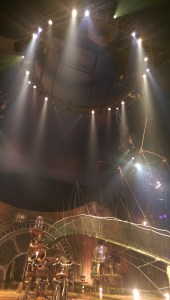
Tomorrow I am going to Cirque du Soleil. I’m excited! It’s going to be so amazing, I can’t wait!

So today, while thinking about it, I randomly thought “I’m going to have to mute my phone for that”. Not “I’ll need to turn it off,” or “I won’t need my phone.” no, there is the expectation in my own mind that I will have my phone and my children will be able to reach me is that need to. I would feel guilty for having fun and enjoying a movie, or a show and finding out after that something horrible happened at home.

There is a cord between my phone and I, and is only gotten stronger as new tech comes out. And I don’t begrudge this. From my phone I can read the news, check social media, read a book, write a blog post, take pics, even work on my novel anywhere in the world. I can communicate with people from all over, give directions to people who are lost, and answer random questions.

I think my life is fuller because of this little pocket computer.

So much has changed in just ten years. What’s it going to be like in 2025? I’ll be 47 then, and still reading to go with the new tech, I hope.

Justice or Peace?

I’ve been thinking about this a lot today, especially after reading this news article. Do we want justice, or do we want peace?

I can hear the answer already… we want both. Right? Of course we want both. We deserve both! You can’t have one without the other. Etc.

But what is justice? Sometimes it’s easy enough to spot the just answer. A person steals your car they should replace your car. A person defaces your fence with spray paint? They should repaint it.

A person kills your spouse? That’s when it starts getting murky. Is justice to lock them away? Is it justice to kill them too?

In the middle east there is constant fighting and killing because one party feels wronged by another and they want JUSTICE! There can be no peace without justice.

After WWII there were a great many people who had to decide what justice was in that situation. They had peace. They signed a treaty and gave up the war. But what about payment for all the lives lost? The suffering? Who’s fault was it and who was going to pay? The German army alone contained about 10 million people. Then there was Stalin, and all the things he did to his people. And captains of the guard, and various people who just turned over the Jews. Who was to blame? The person who started it? Those who went along with it? The ones who made the orders and threatened to kill them if they didn’t go along with it?

In the end they tried 24 men for the millions of lives lost. Was this justice? That all the others who had anything to do with the war, or killing, just went home and went back to their lives?

The alternative was worse.

Maybe there can’t be true peace without justice, but sometimes justice might not look like justice to the casual observer.

If someone starts spreading rumors about you that you are a mean and horrible person, and then you start acting like a mean and horrible person to that person because the rumors then you are proving them right. In the case of the original article, ISIS spreads the story that Jordan, and others, are terrifying people who kill their prisoners. And now Jordan did kill their prisoners. ISIS now can say “See, look, we are right. It is as we said.”

It’s a tricky thing, these politics between countries. You get into group dynamics, and herd mentalities on massive scales.

I don’t know the answer. I like to think education, and humanitarian aid would help. Teaching them to help themselves, and bringing them up out of the isolationism imposed on them into the global world. But I don’t know.

What I do know: As long as the eye for an eye mentality keeps going there can be no peace. “Justice” for the wrongs you perceive on this massive scale sometimes have to be let go of in order to go on with the process of healing.

What is slow?

I just read this article about slow writers, and their place in the current Amazon world. They make some valid points about certain authors who advocate for writing fast and not editing. I also advocate just getting that first draft out and on the page, and then turning it over and writing something else. That is because a person who writes often, and a lot, has more practice then someone who does not.

But I digress, the question today is “what is slow?”

I know the guys over at Self Publishing Podcast can crank out the wordage. They managed to publish quite a few books last year. I think they are slowing down this year to focus a little more on their brand and put a little more time into their writing, but even then they still crank out more words in a month then I do in three.

Dean Wesley Smith writes TONS of words every single day. He also advocates Heinlein’s Rules about writing fast and not editing (unless your editor tells you to.) He has some great reasons to do so. He also has good examples of published writers who do write incredibly fast. Nora Roberts, Stephen King, Ray Bradbury and every other author on this list. From authors that wrote a short story every week (because no one can write 52 bad short stories) to those who wrote several novels a year.

Then there are others who wrote one single book and earned great acclaim. Withering Heights by Emily Bronte. Black Beauty by Anna Sewell. Gone with the Wind by Margret Michelle. Invisible Man by Ralph Ellison. All books that have made their way into the national culture, film, cartoons, spin offs, etc.

A huge difference between Ralph Ellison and Stephen King… One makes a living as an author. The other made his living in other things and also wrote a fantastic book that has inspired generations. Not to say that Stephen King hasn’t written some wonderful things, some of which might inspire others along their path. Ray Bradbury, Philip K Dick and Isaac Asimov were all extremely prolific authors who made their living writing. Their works are now considered classics that will inspire and influence our culture for a very long time.

To me I suppose when I say I am slow it is because I am unsatisfied with how quickly I am writing. I know I can do more, spend more time at it, and get the ideas out of my head and on to the paper.

I think if you want to make a living at being a writer then you have to write enough to sustain that career. Every author who has come forward to say they are currently making a comfortable living off of their writing has said the same thing: they write almost every day, and they write a lot. You can not sustain a house, cell phone, car, water, and electricity off of one book in a lifetime… not unless that was a REALLY good book. And striking that really good book isn’t likely. It happens to one author every couple of years. Do you know how many authors there are out there right now?

There is something to be said for writers who are still learning their craft, honing their skills, and fine tuning their instruments. A pianist doesn’t go out to play in front of a crowd until he’s had years of practice. And those of us who started writing as children have an advantage. We had those years of honing our skills while others were out playing kick ball and hop scotch. You, the beginning writer, need to take that time to hone those skills and become more comfortable with your words. Take that time, get it right, and then decide what you want to do with those words. What level are you comfortable at.

There is also room for the part time author. The author who has a “day job” while they write. (That’s what I’m doing.) I am still an author. That is how I think of myself, and how I introduce myself, because that is what I am even if I don’t make my entire living off of it.

How slow is slow? That depends on your goals. For me I feel slow because I know I can do more, and I feel that I need to because I want more then anything to be writing full time. To get out of the rat race once and for all. I need to write faster, which for me just means less time gaming and more time on scrivener.

But you have to make your own decision. You have to find what your comfortable with, and decide if that fits the life style you eventually want. It might mean you are perfectly happy with exactly where you are. It might mean putting in extra hours every week to learn that skill, to get better on your instrument so that you can finally play for the crowd.

(Also listen to this great podcast with Neil Gaiman who comments on the subject of writing every day, finishing, and breaking through the wall.)

I’m a book snob!

A few months back I got an email from Amazon reminding me that the book I pre-ordered is now coming out. I was kind of surprised. I don’t generally pre-order anything. But I looked up the book and discovered it was the XKCD hard copy of “What If?“, and thought I probably ordered it for my son (since he’s very sciency) so I kept the order.

I love the book and I’m glad I bought it. Every so often I pick it up and just read a few of the questions for those bite sized chunks of science in a slightly funny tone.

Then there was “Choose Your Own Auto Biography” by Neil Patrick Harris, “You’re Never Weird on the Internet” by Felicia Day, and “ASAP Science; Answers to the Worlds Weirdest Questions” by the guys over at ASAP Science. “The Art of Asking” by Amanda Palmer. All of which are books I would love to read. All of which are books I don’t necessarily want to buy. At least not now at their price.

Most of these individuals made their name famous by doing things on their own. Felicia Day made a web series that is highly acclaimed on her own. ASAP Science is a well known youtube channel that they did on their own. Amanda Palmer has a fantastic music career that she became famous for ON HER OWN. And each of them went to a traditional publisher (or they were probably approached by the publisher) to do their book. Each time I heard this I was slightly disappointed. These well known figures who lead the “do it yourself” community … I guess I wouldn’t say they sold out, but they didn’t stick with the indie vibe that got them where they are today.

And I can’t say I fault the various authors for going with traditional publications. They get an advance, they don’t have to deal with editors, illustrators, formatters, etc, they don’t have to pay for everything up front. They just have to write it and hand it over and maybe go on some book tours. I get it, and I might even do it if I got a good enough advance (and liked the contract enough).

Besides the fact of losing their indie feel, there is the price of the books. $18 for print, $13 for ebook, and that’s with amazon’s discounts. “What If?” is a little older so there are used copies, but still… really? $13 for an ebook?

I think I’ve been spoiled having $2.99 to $5.99 ebooks. I look at those prices and think “If I buy that book that means I can’t buy the three other books on my wish list.” So they are sitting on my wishlist till the day they either go on sale, or I convince myself it’s alright to spend that much on a book. (Or maybe someone buys it for me for Christmas.)

Here’s the thing… I don’t even spend $15 on my video games very often. With Humble Bundles and Steam sales there really just isn’t a reason to pay more then $5 for most games. The few that I do get that are over $5 I wait till they’ve been out a while so I can see some game play, and hear some honest reviews about what the game is really like. I want to KNOW I will like the game before I ever spend the money on it. And the few AAA titles that were close to $60 when I bought them I had some hands on game time with before I ever purchased them. (Thank Star Wars Old Republic for that one. Bought it, hated it, and wasted $60 better spent elsewhere. Not doing that again.)

In an age where people increasingly have less and less money to spend on entertainment it makes no sense to keep pricing things at a premium all the time. (Especially things that are sometimes broken in the case of video games.) But as long as there are people willing to buy them at that price I guess it’s going to keep happening. I guess if I had more disposable income I would to.

Back tracking

zombie miniA while ago I started working on a short story called Zombie Swarm. I even came up with a cover that I really liked.

So why isn’t it out? Because as much as I liked the concept and several of the scenes of that story, it just wasn’t good enough.

The biggest problem was easy to fix. I added a few more characters. The whole situation wasn’t very convincing or suspenseful enough so it ended up falling a little flat. Most of the story takes place inside of once little lab, but with only two people working in a lab you don’t have a lot to work with. I added three more people and suddenly things started coming together. There were more issues between characters, more problems, and more strife. Then the creature they are dealing with, I didn’t have to change it much, but I did have to add a few more scenes to the original plot, and a lot more detail.

So it meant going back, completely reworking the original plot line, and rewriting it. I threw away the 6000 words I’d already written to start all over again. But I know I’m going to have a better story because I did that, even if it really REALLY sucked throwing away 6k words that I wrote. I’m also expecting the finished story to be twice as long, at least, so that’s a plus.

Don’t be afraid to throw it out and start all over again.

The world is messed up!

My daughters boyfriend spent a week in jail. He was suppose to be in there for three days because he couldn’t pay a fine. He almost had to spend a month in jail. FOR A FINE! What kind of messed up country do we have that we put people in jail for being unable to pay a fine, and not only that but we keep them there for longer then we were suppose to, because we can.

It’s all about the money. Each person in a jail is money. Tax money that goes to the jail to house, cloth and feed them. Do you know what they are eating? Can’s of food marked “NOT FIT FOR HUMAN CONSUMPTION.” I was incredulous about that so looked it up. Apparently it is common practice for jails to get food that is suppose to be used for animals, or is expired, sometimes with worms in it, to save the jail money. Because money.

And this is not the first person I’ve known to have this happen to them. A friend of mine served three months on a one month sentence. After serving a month he was told “this month doesn’t count toward your service because it’s at the wrong jail.” The wrong jail? WTF! It’s a jail? How is it the WRONG JAIL!? Lets not even get into the fact that my friend was serving for a domestic abuse when in fact his ex is the one that is stalking, beating, and screaming at him. (I’ve seen her do it.) He’s homeless now and she calls up anyone willing to help him and tries to spread more lies about him being on meth (he’s on probation and being tested, so no meth) and basically making life miserable for everyone. But he goes to jail.

Screen-Shot-2012-10-15-at-10.25.43-AMWe call this a justice system? Where is the justice? And now that pot is no longer a jailable offence they are finding other excuses, because we need to keep the jails full, right? WHY? Why are we paying our tax dollars to jail 2.2 million people, and put another 4.8 million on probation. That’s SEVEN MILLION PEOPLE in the USA that are under “correctional supervision”. Why? For money. More then TRIPLE per capita of any other country.

Prison labor is the only form of slavery still allowed in the USA. Prisoners who do not perform the work they are “asked” to do can be sanctioned with less food, longer sentence, or worse treatment. Prisoners can work in call centers, making books for the blind, park benches and Victoria Secret lingerie. They often do this work for cents on the dollar, because they are prisoners not people.

We say we are “the nation of the free”. I don’t really see it anymore.

(More info here)

Venturing out of the Hobbit Hole

2015-01-27 00.23.12The books are here! And so are my tickets. I’m going to RadCon!

Oh God! I’m going to RadCon!

Okay Crissy, breathe, it’s okay. We can do this thing!

In all seriousness, I am excited and worried, and nervous all at the same time. I keep telling myself that this nervousness I am feeling isn’t anxiety over crowds of people I don’t know, no it’s EXCITEMENT. Because excitement is just as gut twisting and hard to deal with, but not as scary.

So, I’ve got the books, and maybe I should pack an overnight bag.

Also, writing is going swimmingly. I am back to my 1000 words a day, and feeling great about finishing a few more chapters. I have added another 8,000 words to Mermaid’s Curse since the beta reader made some suggestions. Wow, that’s a lot more then I thought, and I still have another 5-10k to go. The final scene I’m writing is, of course, a big battle scene that I’m leaving to the end because I dread writing battle scenes.

So… If you are at RadCon tweet me. Come say HI!. I’d love to meet you.

Moonlit Sonata (A Short Story)

moonlitMoonlit Sonata

Sonata’s hands danced across the keys, her soul reaching out through her fingertips. Ebony and ivory, a harmony that responded to her touch, and hers alone.

Whenever she sat down to play the piano she couldn’t help remembering the first time. Caressing the keys. Tentatively pressing a few notes. And each note came out pure and strong even though she, just a girl of eight, had no idea how to actually play the giant instrument.

Her grandfather pulled her up in his lap and she would watch as his hands moved along the keyboard playing chopsticks, Mary had a little lamb and the wheels on the bus. When she showed so much interest in the music he started moving into more intricate pieces. Fur Elise. Barber of Seville. Blue Danube.

Each song played a story in her mind. The notes moved upward in sharp angles, and she saw dragons fighting across a red sky. Soft keys flowing out in a slow rhythm were like swans lazily swimming across an icy pool of water. Each key. Each score. An image and a story that laid itself out just for her.

The memories made her melancholy, longing for her grandfather, long since passed, and all the quiet moments they spent together making music.

The melancholy worked its way into the music. Moonlight Sonata by Beethoven. The quiet rhythms of the thousand year old piece slowly playing out across the dark night.

Her thoughts moved to the room, the darkness closing in around her. The piano still sat in the same room overlooking the river far below. On still nights you could see the moonlight glittering off the subtle waves. A fitting companion to her music. She matched her tempo to the rippling light, softer then faster, and softer again. Experimentation.

The home, built by her great grand father shortly before the civil war, was her second love. It had housed the sick and injured during the war, been home to a speakeasy during Prohibition, held wild and sometimes disastrous parties, all before she’d ever been born. The history was written into every piece of wood. Names carved into balusters. Graffiti stenciled on bathroom walls. Holes cut into certain walls, then repaired over and over again.

Her mother once told her the house was haunted. A laughable thing, surely. Sonata didn’t believe in heaven, or hell, demons or angels. Why, then, would she believe in something as insubstantial as a ghost?

She giggled at her own pun as she set into Presto Agitato, her fingers fairly flying across the keys. Over and over she pounded out the notes, faster and harder with each slide up the scale.

Like a frolicking gazelle, she played the notes, feeling the joy and wonder of her home around her, swaddled in the moonlit night. Happy and content. Locked together just as the notes of the song were locked together.

She glanced up to the left of the piano. Her grandfather use to stand there watching over her as she played, and even now she felt she could feel his presence there. Watching. Waiting.

If her grandfather watched over her then she would give him the best concert of his entire life, or death, she thought as she tripped across the ivory keys.

Piece after piece she played. Chopin. Lebrun. Bach. Tchaikovsky. Each one with their own virtues and difficulties. She had practiced for years, learning piece after piece to add to her repertoire. Learning the inscrutable differences between the frenetic work of Mozart, or the melancholy scores of Schubert . And she played them all with the utmost precision.

Precision wasn’t enough to be a great pianist. Being female had it’s own drawbacks. Men did not think highly of women who pursued places in the arts. Painters, sculptures, musicians. All of the truly greats in all areas were men. Sonata always maintained that she, as a woman, had just as much right to play professionally as any man, but it didn’t matter. You couldn’t sell tickets to a womans concert.

Instead she spent the long days whiling away her time in front of the piano. With her inheritance she lived comfortably, never wanting for anything, and throwing the occasional party where she would play for her guests who watched in rapt adoration as she played.

From the shadows she heard a scrape on the wood, like shoes walking toward her. She glanced up to find ghostly images walking down the corridor toward her. Faint white glimmers on the landscape that shimmered into view then blinked out of existence.

There were no such things as ghosts, she told herself again, her fingers never stopping on the keys. It was the night playing tricks on her. Old memories surfacing from the past. But the night was coming to a close. The sun would rise, and she would still be safe in her mansion. All alone.

For hours she played, song after song echoing up through the old wooden house. Memories circled through her thoughts. Her father on his death bed wishing her happiness. Her music teacher praising her for her marvelous playing. A cousin stopping in to see why she never answered her telegrams.

And always the music soothed away the troubled memories.

Then the sky grew lighter, sunlight spilling over the horizon. The warm glow splashed across the side of the piano and Sonata smiled, enjoying the warmth washing over the room as she started playing another complicated piece.

The sun rose higher, as though each note she picked along the keyboard was a signal for the world to spin, the sun rising in the west at her bidding. She watched it creeping up the side of the piano, playing faster and faster, as though trying to capture every possible note she could before the sunlight touched her skin.

Something about the suns progress across the hard wood floor sent a shiver through her. The sun was supposed to bring cheer and good will, but all she felt was panic.

Sun. Son. Was that why? Was it the reminder of the child she would never have?

At one time there had been many suiters calling for her hand. They would come to the great mansion at the top of the hill and gaze over the land with hungry eyes. And some part of her hardened. If she could not be the concert pianist that she dreamed of then she would not give into their demands. Would not give them the key to their desires.

Selfish? Perhaps. Her mother once begged her for the gift of grandchildren. But it was already too late. As the consumption ate away at her mother’s body she had no comfort of tiny feet racing across the floors, only the sound of the piano. The endless music reminding her that she failed her daughter.

Once her mother started to scream, begging that the music end. Only her fathers threats of destroyed the piano stilled the keys. Sonata would stare longly from the doorway, her fingers moving to the staccato beat across the counter, waiting, yearning for the day she could play again.

And the day came when her mother passed away, and they laid her in the ground in the small cemetery out back. She lay beside her own mother and father, and many family members from before Sonata’s birth. Men and women who lived, and loved, and died in the walls of the mansion.

And music once again filled the walls.

Light touched the keys and Sonata cringed away from it. Why? It was only light she told herself.

The keys glowed white as the sunlight spread.

Sonata played on, dancing across the keys, her eyes closed as they flew up the scale…

And screamed!

The sunlight burned. Like putting her hand into a vat of acid, the light spilled around her finger tips, burning away her flesh, the pain searing up her arm and into every nerve of her body.

She backed away from the piano, and the light flooding over it, cradling her hand to her chest. How was it even possible? How could the sun keep her from the piano. Music was her life. She had to have it or she would fade away.

The light slipped across the floor as the sun rose in the sky, a pool of it edging closer to her feet.

She took a step back, stretching her hand out toward the piano, needing the music. Feeling herself growing dimmer as the notes faded from the room.

But something was wrong with her hand. She held it up before her. There were no burn marks from the sunlight, but her hand began to twist in on itself. She tried stretching out her fingers, as though playing the scales, but they barely moved, the tendons tightening and pulling even harder.

“No!” she cried, looking down at her hands as they curled up into claws right in front of her eyes. “No! You can’t do this to me! No!”

The music long since silent, her cries echoed through the room, vibrating off the empty walls, and flooding up the stairs.

And then the full force of the sun spilled across her feet, and up her body.

With one final agonizing scream Sonata blinked out of existence.

****

“Did you hear that?” Janet asked, sitting up on the couch.

“What? The piano?”

“Yes, it sounded like a piano. Is there a radio on or something?”

“No, it just plays sometimes. Ever since Sonata Everson died you can hear it on moonlit night. I think it’s Beethoven.”

“Beethoven? You have a ghost that plays Beethoven?”

“I didn’t say I had a ghost,” he said, before taking a sip of coffee. “I have a home with an interesting past. Sometimes happy, a lot of times quite sad. Ms. Everson was no exception. And now you hear the piano on moonlit nights. That doesn’t mean its haunted.”

“She killed herself, didn’t she?” Janet said, settling back against the overstuffed cushions.

Anthony’s arms snaked up around her to enjoy the sunrise through the grand balcony overlooking the river below. His thumb rubbed back and forth across the bare skin of her arm.

“Yes. Her hands started turning in on themselves. Some think she had a severe form of carpal tunnel, but they didn’t have diagnosis for that back then.”

“Carpal tunnel? You mean from repetitive motion, like playing the piano?”

“Ironic, isn’t it? A simple surgery would have fixed it, but they didn’t know about it back then. Once she couldn’t play the piano anymore she didn’t want to live. Quite tragic, really.”

“And you bought the old house anyway?”

“It’s a beautiful house with great bones, and an incredible view of the water. If I have to share it with a ghost that finally gets to play the piano again, I’m alright with that.”

Janet looked out across the sun deck. There was a darker patch on the hard wood floor. Perhaps it wasn’t as faded as the rest, and it was vaguely in the shape of a grand piano. The sunlight streaming in through the window settled on the spot like a cat stretching from a long nap. Something about it made her shiver.

“Well, I hope you’re right,” she said. “If Ms. Everson is still here I hope she’s happily playing the piano still.”


A break (and a story!)

I’m so close to completing my novel. The words were coming, in drips and drabs but they were coming. But things are getting frustrating. I knew I needed a break from the constant immersion in my story world.

So I set aside Mermaids Curse for a day and wrote a short story.

Only a day, and while I feel slightly guilty for setting it aside to work on something else, it felt incredible to actually FINISH something. It’s short, (only 1500 words) but it’s done.

So… I’m going to edit it tonight and send it out in the morning. There is a short little snippet to available to read here to wet your whistle. Check back later for the completed version.

And then! back to our regularly scheduled novel.